


Pool Deck Resurfacing in DFW: When to Repair, Resurface, or Replace
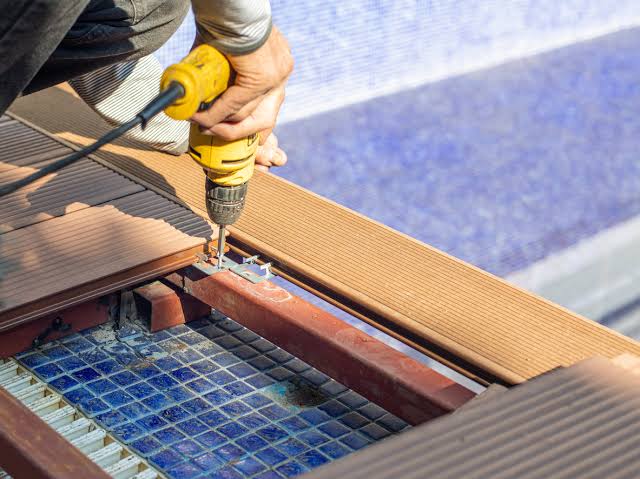
The pool deck takes more abuse than almost any other surface in a Dallas-Fort Worth backyard. Relentless UV exposure. Extreme heat that causes expansion and contraction. Clay soil shifting beneath it with every rainfall and drought. Chemical exposure from pool splash. Years of foot traffic from wet feet, furniture legs, and everything else a busy backyard puts a surface through.
Eventually, every pool deck in DFW shows the consequences of all that. Cracks appear. Surfaces fade and stain. Sections become uneven. The deck that looked sharp when the pool was new starts to make even a well-maintained pool look dated.
When that happens, DFW homeowners face a three-way decision: repair the specific problem areas, resurface the entire deck with a new coating or overlay, or tear it out and replace it entirely with a new deck material. Each option involves different costs, different outcomes, and different situations where it makes sense.
This guide walks through exactly how to think about that decision for your specific DFW pool deck — what the signs are for each path, what each option actually involves and costs, and how to avoid spending money on an approach that won't solve the underlying problem.
Why DFW Pool Decks Deteriorate Faster Than Most
Understanding why pool decks in North Texas fail faster than in most other markets helps clarify what solutions will actually work — and which ones are temporary fixes on a deck that has more fundamental problems.
Expansive clay soil is the primary structural cause of pool deck deterioration in DFW. The clay beneath most Dallas-Fort Worth properties expands significantly when wet and contracts when dry, creating a constant cycle of movement beneath the deck slab. Concrete, which is a rigid material, cracks when the ground beneath it moves. Every crack is an entry point for water. Water infiltrates the crack, the clay absorbs it and expands further, and the crack widens. Over years, this cycle produces a deck that is cracked throughout and structurally compromised at its base.
Thermal cycling accelerates surface deterioration. DFW's extreme temperature range — from 105°F summer afternoons to below-freezing winter events — causes concrete to expand and contract repeatedly. Hairline cracks that form during the first hot summer allow water infiltration that freezes and expands during winter freeze events, widening those cracks dramatically.
UV exposure and chemical contact degrade surface coatings and sealers faster in DFW than in cooler, less sunny markets. A sealer that protects a concrete pool deck effectively for five years in a northern climate may require reapplication every two to three years in the North Texas sun.
Option 1: Spot Repair
Spot repair addresses specific damaged areas of a pool deck without treating the entire surface. It is the right approach when deck problems are isolated, the overall condition of the slab is sound, and the specific damage does not indicate a broader structural issue.
When spot repair is appropriate:
- Isolated cracks that are cosmetic rather than structurally significant
- Specific sections of spalling or surface deterioration with the surrounding deck in good condition
- Areas where tree roots have caused localized lifting that can be addressed without full deck replacement
When spot repair is not enough:
Spot repair addresses symptoms, not causes. If the cracks reappear within a season or two after repair — which is common in DFW's clay soil environment — it indicates that the underlying soil movement is ongoing and surface patching is not a durable solution. Repairing the same cracks repeatedly is a more expensive approach than addressing the deck properly with a resurfacing or replacement solution.
Cost: $500 to $3,000 depending on the scope of damage and repair method.
Option 2: Pool Deck Resurfacing
Pool deck resurfacing covers the entire existing deck surface with a new material layer — either a concrete overlay, a spray texture coating, or new paver installation over the existing slab — to restore appearance, improve performance, and extend the useful life of the deck without full demolition and replacement.
Resurfacing is the right solution when the underlying concrete slab is structurally sound — meaning it is not severely cracked, not significantly unlevel due to soil movement, and not compromised at its base — but the surface is worn, stained, outdated, or showing manageable deterioration.
Concrete overlay resurfacing applies a polymer-modified concrete material over the cleaned and prepared existing slab. The overlay can be finished with a broom texture, exposed aggregate, stamp patterns, or spray texture to achieve a range of appearances. Overlays restore the visual appearance of the deck, improve slip resistance, and add a protective layer that is more durable than the original surface. They cannot, however, structurally repair a slab that is cracking due to soil movement — overlays applied to a moving slab will crack along the same lines as the slab beneath them.
Cool Deck spray application is a popular resurfacing option in DFW for homeowners who want improved heat performance and refreshed appearance at a lower cost. The spray-applied acrylic coating stays significantly cooler underfoot than standard concrete and provides a non-slip texture that is comfortable for barefoot pool use. It is a surface treatment rather than a structural repair, and its lifespan in DFW conditions is five to eight years before reapplication is needed.
Paver overlay installation places new travertine, concrete pavers, or porcelain tile directly over an existing concrete slab — effectively creating a new premium deck surface over the existing base. This approach delivers the full aesthetic upgrade of a premium deck material without the cost and disruption of full slab demolition. The existing slab must be structurally sound and reasonably level for a paver overlay to perform correctly. Significant cracks or unlevel sections in the existing slab must be addressed before overlay installation.
Cost of pool deck resurfacing in DFW:
- Concrete overlay: $5 to $10 per square foot
- Cool Deck spray application: $3 to $7 per square foot
- Travertine paver overlay: $15 to $25 per square foot installed
- Concrete paver overlay: $12 to $20 per square foot installed
For a typical 600-square-foot pool deck in DFW, resurfacing costs run approximately $3,000 to $15,000 depending on the method chosen.
Option 3: Full Pool Deck Replacement
Full pool deck replacement involves demolishing and removing the existing concrete slab and constructing an entirely new deck from the ground up. It is more expensive and disruptive than resurfacing, but it is the right solution in specific situations where resurfacing cannot produce a durable result.
When full pool deck replacement is the right choice:
Severe, widespread cracking from soil movement. When the existing slab has extensive cracking throughout — not isolated cracks but a pattern of cracking across the entire deck — it indicates that soil movement has fundamentally compromised the slab's structural integrity. Applying a new surface over a slab in this condition produces results that crack along the same lines within a season or two. Full replacement allows the base to be properly regraded, the drainage issues that contributed to the soil movement to be addressed, and a new slab to be built with appropriate thickness and reinforcement.
Significant unlevel sections. When sections of the deck have heaved or settled significantly due to soil movement, creating uneven surfaces that create tripping hazards and drainage problems, resurfacing cannot fix the underlying geometry. Full replacement addresses the grade and levelness of the deck at the base level.
Desire for a significantly different deck footprint or layout. If the existing deck is too small, improperly laid out relative to the pool and outdoor living area, or needs to be extended significantly, full replacement allows a complete redesign rather than working within the constraints of an existing slab.
The deck is more than 25 to 30 years old. Older concrete decks — particularly those that predate modern mix specifications and installation practices for DFW's clay soil environment — may be past the point where resurfacing provides a durable result. When significant resurfacing investment would require repeat application within a few years due to underlying slab deterioration, full replacement provides better long-term value.
Cost of full pool deck replacement in DFW:
Demolition, removal, and new concrete pool deck installation runs approximately $15 to $30 per square foot depending on deck size, thickness, reinforcement specifications, and finish material. For a 600-square-foot deck, full replacement in standard concrete runs $9,000 to $18,000. Premium materials — travertine, concrete pavers, or large-format porcelain — add to the installed cost.
How to Assess Your DFW Pool Deck
Before making the repair, resurface, or replace decision, a proper assessment of your existing deck is essential. Here is how to evaluate what you are working with.
Walk the entire deck and document all cracks. Isolated cracks in a few locations suggest localized issues that resurfacing can address. Cracking across the entire deck surface suggests systemic soil movement that may require replacement.
Check for unlevel sections. Walk slowly across the deck and feel for transitions where one section is noticeably higher or lower than adjacent sections. These transitions are tripping hazards and indicators of significant soil movement.
Assess the existing surface condition. Is the surface primarily faded and stained with minor surface deterioration, or is it spalling, delaminating, or showing significant structural surface breakdown? The former is a resurfacing candidate. The latter may require replacement.
Consider the age of the deck. A ten-year-old deck showing surface wear in a structurally sound slab is typically an excellent resurfacing candidate. A twenty-five-year-old deck with extensive cracking and movement may be past the point where resurfacing provides durable results.
Get a professional assessment. The most accurate way to determine the right path is to have an experienced pool remodeling company assess your specific deck. At Kingswood Outdoors, we provide honest assessments that tell you what the deck actually needs — not what produces the largest project scope for us.
Pool Deck Resurfacing and Replacement With Kingswood Outdoors
At Kingswood Outdoors, pool deck resurfacing and replacement is part of our comprehensive pool remodeling service for DFW homeowners. We understand what North Texas pool decks go through, what the common failure modes are, and what solutions provide durable results in the specific conditions of the Dallas-Fort Worth climate.
We serve homeowners throughout Flower Mound, Colleyville, Arlington, Highland Village, Southlake, Keller, Fort Worth, and across Tarrant and Denton Counties.
