


Best Pool Deck Materials for DFW Homeowners: Travertine, Pavers, and More
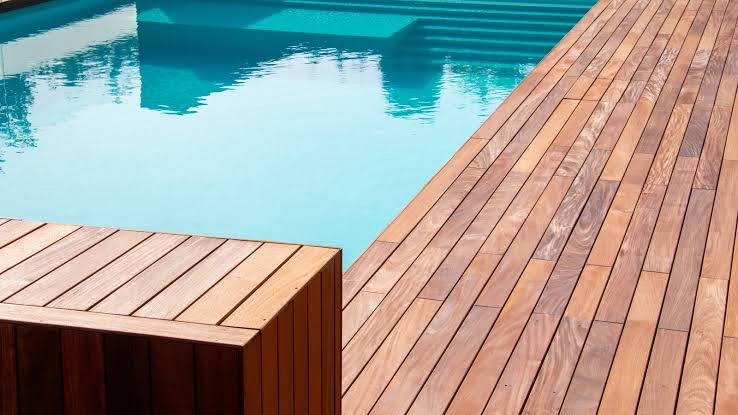
Your pool deck is the largest visible surface in your entire backyard. It is what your feet touch every time you get in and out of the water. It is where your guests sit, where your kids run, and where the majority of the visual impression of your outdoor living space is made. And in Dallas-Fort Worth, it is exposed to conditions that will test any material you put down — relentless summer heat, UV radiation, clay soil movement, and freeze events that arrive without much warning.
Choosing the right pool deck material in DFW is not just an aesthetic decision. It is a practical one with real consequences for safety, comfort, maintenance costs, and how much your family actually uses the outdoor space you built.
This guide covers every major pool deck material option available to DFW homeowners — what each one looks like, how it performs in the North Texas climate, what it costs, and which applications it is best suited for. By the end, you will know exactly what to specify for your pool deck and why.
Why Pool Deck Material Selection Matters More in DFW Than Most Markets
Before comparing materials, it is worth understanding the specific conditions any pool deck in Dallas-Fort Worth must be able to handle — because these conditions eliminate some materials from consideration and elevate others.
Surface temperature in Texas sun is a primary safety concern. Peak surface temperatures on pool decks in DFW during July and August are not just uncomfortable — they are dangerous. Dark stamped concrete under direct Texas sun regularly reaches 150 to 160 degrees Fahrenheit. Skin begins to burn at sustained contact with surfaces above 125 degrees. Children and pets are particularly vulnerable. Any material selection that ignores heat performance is a material selection that makes your pool less usable during the hottest months of the year.
Clay soil movement cracks rigid surfaces. DFW's expansive clay soil swells and contracts with every rainfall and drought cycle, and that movement puts constant stress on rigid pool deck materials. Standard concrete — even when properly installed — typically requires significant crack repair within five to seven years in the DFW environment. Material selections and installation methods that accommodate soil movement outperform rigid systems significantly in North Texas.
UV exposure degrades sealers and coatings. Many deck systems that look great at installation rely on sealers or coatings that degrade under intense UV exposure. In DFW, a sealer that might last five years in a northern climate may require reapplication every two to three years. Understanding the ongoing maintenance requirements of any material selection before committing to it saves significant cost and frustration over the life of the pool.
Travertine Pool Deck
Travertine is the gold standard for pool decking in the DFW market — and it earns that position through a combination of performance characteristics that no other material matches in the North Texas climate.
Heat performance. Travertine stays dramatically cooler underfoot than any concrete-based material in direct Texas sun. Its natural thermal properties — a result of the stone's porous structure and light coloration — result in surface temperatures 20 to 30 degrees Fahrenheit lower than brushed concrete under identical sun exposure conditions. In a market where concrete surfaces can reach temperatures that burn bare feet in July, this is not a minor advantage. It is the difference between a deck that is comfortable to walk on all day and one that forces everyone back into the pool after every few steps.
Slip resistance. Travertine's natural texture provides excellent slip resistance when wet — an important safety consideration for any pool deck. Tumbled finish travertine, which is the most popular option for DFW pool decks, offers superior traction and a non-slip surface that performs well for all ages.
Clay soil compatibility. Because travertine pavers are installed as individual units with sand-set or mortar-set joints, they accommodate soil movement better than monolithic concrete slabs. When the clay soil beneath a travertine deck moves, individual pavers can shift slightly without cracking. A paver that moves can be reset. A cracked concrete slab requires grinding, patching, or full replacement.
Aesthetics. Travertine's natural variation in color and veining creates a visual quality that no manufactured material can replicate. Available in ivory, walnut, silver, and gold colorways, travertine complements both contemporary and traditional pool designs and pairs naturally with natural stone coping and premium pool finishes. A travertine-decked DFW backyard photographs exactly the way luxury resort backyard photos look — because luxury resorts use travertine for the same reasons DFW homeowners should.
Cost. Travertine pool deck installation in DFW typically runs $18 to $30 per square foot installed, depending on tile size, pattern, and site conditions. It costs more than standard concrete, less than premium large-format porcelain. Over the life of the pool, the lower maintenance requirements and exceptional durability of travertine make the premium investment cost-effective relative to alternatives that require more frequent repair or replacement.
Best for: DFW homeowners building new pools or replacing existing decks who want the combination of premium aesthetics, superior heat performance, and long-term durability. Travertine is Kingswood Outdoors' most frequently recommended pool deck material for the North Texas market.
Concrete Pavers
Concrete pavers are one of the most versatile pool deck materials available for DFW homeowners — offering a wide range of aesthetic options, solid performance in the North Texas climate, and a price point that falls between standard concrete and natural stone.
Modern concrete pavers for pool decks have improved dramatically from the plain gray blocks of earlier generations. Premium architectural-grade concrete pavers are now available in formats that convincingly replicate the appearance of travertine, limestone, and natural stone — with the consistent sizing and uniform quality that natural materials cannot always provide.
Performance in DFW. Concrete pavers handle the clay soil movement issue better than poured concrete because of their segmented construction — individual units that can shift without cracking. Surface temperature performance varies significantly based on color: lighter-colored pavers stay considerably cooler than dark options and outperform poured concrete in heat retention. Mid-tone pavers in tan, beige, and buff ranges — the most popular choices in DFW — typically run 10 to 20 degrees cooler than poured concrete under equivalent sun exposure.
Maintenance. Individual pavers can be removed and replaced if damaged, making spot repairs straightforward. Joint sand requires occasional replenishment, and periodic power washing keeps the surface clean and attractive.
Cost. Concrete paver pool deck installation in DFW runs approximately $12 to $22 per square foot installed depending on paver quality, pattern complexity, and site conditions.
Best for: DFW homeowners who want a premium look at a more accessible price point than natural travertine, or who want the design flexibility of a wide range of colors and formats.
Brushed Concrete
Brushed or broom-finished concrete is the most common pool deck material in DFW — primarily because it is the default option that many builders include in their base proposals, not because it is the best performer in the North Texas environment.
Standard brushed concrete is functional, reasonably durable when properly installed, and the most affordable option per square foot. Its limitations in DFW are real and worth understanding before choosing it as a pool deck material.
Heat performance. Light-colored brushed concrete runs 130 to 140 degrees Fahrenheit on the surface during peak July sun — hot enough that barefoot use during afternoon hours is uncomfortable to genuinely painful. Darker colored or stained concrete reaches significantly higher temperatures.
Cracking. Poured concrete in DFW's clay soil environment cracks. This is not a question of if but when. Proper installation with adequate thickness, rebar reinforcement, control joints, and properly compacted base material delays cracking significantly — but over the 15 to 20 year life of a pool, virtually every standard concrete pool deck in North Texas shows significant crack development. Crack repair ranges from cosmetic filling to full slab replacement depending on severity.
Resurfacing. When standard concrete deteriorates or cracks significantly, it can be resurfaced with a concrete overlay system — a polymer-modified concrete applied over the existing slab that restores the surface appearance without full replacement. This is one of the most common pool remodeling services in DFW and extends the useful life of an existing concrete deck significantly.
Cost. Standard brushed concrete pool deck installation runs $6 to $12 per square foot in DFW. It is the most affordable option at installation, though the higher maintenance and repair costs over the pool's life often reduce that initial savings.
Best for: Budget-conscious builds where initial cost is the primary consideration, or as a base slab that will be overlaid with a premium finish material in a future remodel.
Stamped Concrete
Stamped concrete uses pattern stamps applied to poured concrete while it is still workable to create surface textures that mimic stone, brick, or slate. Combined with integral color or applied stain, stamped concrete can produce an attractive result that resembles premium materials at a lower installed cost.
The limitations of stamped concrete in DFW are significant and worth addressing directly. Dark stamped concrete — which is common because darker colors produce the most realistic stone appearance — is among the hottest pool deck surfaces available. Surface temperatures of 150 to 160 degrees are common in direct July sun, which makes stamped concrete one of the least comfortable pool deck materials in North Texas from a barefoot use standpoint.
Stamped concrete also requires a protective sealer to maintain its appearance, and that sealer degrades under DFW's intense UV exposure and must be reapplied periodically — typically every two to three years — to prevent color fade and surface deterioration.
Cost. Stamped concrete pool deck installation runs $10 to $18 per square foot in DFW depending on pattern complexity, color, and site conditions.
Best for: Homeowners who want the aesthetic of stone or brick at a concrete price point and are aware of the heat and maintenance trade-offs in the North Texas climate.
Cool Deck Coating
Cool Deck is a spray-applied acrylic coating system specifically engineered to stay cooler underfoot in hot climates — making it one of the most practically focused pool deck surface options for DFW homeowners. The textured, porous surface of Cool Deck creates a heat-dissipating effect that keeps surface temperatures significantly lower than standard concrete under equivalent sun exposure.
Cool Deck is frequently applied over existing concrete pool decks during remodeling projects, making it one of the most accessible upgrades available for homeowners with an existing cracked or faded concrete deck who want improved heat performance without the cost of full replacement.
Performance. Surface temperature performance of Cool Deck is genuinely impressive in the DFW climate — one of the best among applied coating systems. The texture also provides solid slip resistance.
Limitations. Cool Deck coating has a limited lifespan — typically five to eight years in DFW conditions before reapplication or replacement is needed. It is a surface coating, not a structural repair solution, so existing cracks must be addressed before application.
Cost. Cool Deck application over an existing pool deck runs approximately $3 to $7 per square foot in DFW.
Best for: Homeowners with an existing concrete deck who want improved heat performance and refreshed appearance at a budget-friendly price point without full deck replacement.
Large-Format Porcelain Tile
Large-format porcelain tile has emerged as a premium pool deck option in the DFW market over the past several years, driven by advances in manufacturing that produce tile with exceptional dimensional stability, realistic stone appearances, and surface textures specifically engineered for outdoor slip resistance.
Performance. Premium pool-rated porcelain tile is virtually impervious to staining, chemical exposure, and UV fading — it will not lose color or surface quality over the life of the pool. Its non-porous surface resists the calcium and mineral scaling that affects natural stone in DFW's hard water environment. In lighter colorways, heat performance is comparable to travertine.
Limitations. Porcelain tile requires a stable, crack-free substrate to perform correctly. In DFW's clay soil environment, grout joints in tile decks are susceptible to cracking from soil movement, which can allow water infiltration and lead to tile delamination if the movement is significant. Proper installation with appropriate substrate preparation and flexible grout systems mitigates this risk significantly.
Cost. Large-format porcelain pool deck installation in DFW runs $20 to $35 per square foot installed depending on tile format, pattern, and substrate preparation requirements.
Best for: Modern and contemporary pool designs where a clean, minimal, large-format surface appearance is the aesthetic goal, and where the installation is executed with appropriate substrate preparation for DFW soil conditions.
Choosing the Right Pool Deck Material for Your DFW Pool
The right pool deck material for your specific project depends on your priorities — aesthetic goals, budget, heat performance requirements, maintenance tolerance, and how the deck will be used. Here is a quick decision framework:
For the best combination of heat performance, aesthetics, and long-term durability in DFW: travertine.
For a premium look at a more accessible price with good soil movement tolerance: concrete pavers.
For a budget-conscious new build that can be upgraded later: brushed concrete.
For an affordable refresh of an existing concrete deck: Cool Deck coating or concrete overlay.
For a clean, modern appearance in a controlled installation environment: large-format porcelain.
At Kingswood Outdoors, every outdoor living design project we build for DFW homeowners includes a careful pool deck material recommendation based on the specific yard, the pool design, the home's architecture, and the homeowner's priorities. We do not default everyone to the same material — we match the material to the project.
We serve homeowners throughout Flower Mound, Colleyville, Arlington, Highland Village, Southlake, Keller, Fort Worth, and across Tarrant and Denton Counties.
